
[These brief comments were delivered by The Satyashodhak editor Tejas Harad at the event ‘From Shadows to the Stars: Honoring Rohith Vemula’s Legacy,’ organized in New York on Vemula’s birth anniversary on January 30.]
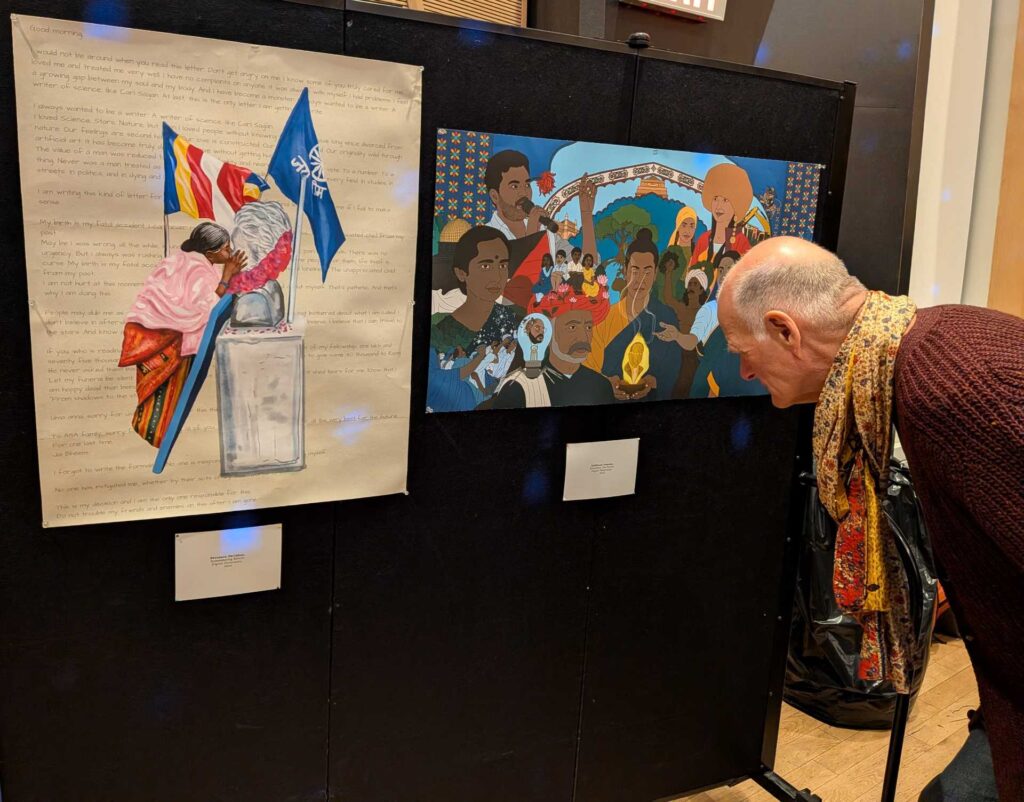
Birthdays are usually a joyous occasion. On Bhim Jayanti, April 14, for example, there are celebrations in the honor of Dr. Babasaheb Ambedkar in India and across the globe. But on Rohith’s birth anniversary today, it is hard not to feel a bit sad: primarily because his passing reminds us of the countless instances of harassment and discrimination Dalit-Bahujan students face on Indian campuses. But at the same time Rohith also shows us the fighting spirit of those same students and the movements they have historically led.
Ironically, as we gather here in New York today, upper castes in India are protesting against the government regulations meant to address casteism on campuses. These reactionary protests show that the fight that Rohith was fighting and that cost him his life, is not over. When he was at the University of Hyderabad, Rohith lived and breathed politics and after his death, he inspired a movement that engulfed the country and beyond.
I did not know Rohith. I think I heard of his passing on Facebook. At that time I was living in Mumbai and worked at Economic and Political Weekly. And like any other millennial, I was very active on Facebook and Twitter. By 2016, I had connected with many other Ambedkarites on social media and it was through these Ambedkarites that I learnt of Rohith’s passing and subsequently his activism.
When the political establishment and mainstream news media was busy labeling Rohith as an anti-national and discussing his caste identity, it was the Ambedkarites on social media and through blogs and platforms like Dalit Camera and Round Table India who challenged the upper caste narrative as well as broadened the terms of debate. They historicized the issue of casteism in higher education, student suicides, upper caste hold over power and so on.
I am very glad to see an art exhibition here today. Visual art was a big component of the Justice for Rohith movement as well. In popular imagination, there is a tendency to pit protest marches, sit-ins and picketing against other ‘softer’ forms of activism such as art and any form of digital activism. I personally feel this is an unproductive binary. Instead of putting street protests in opposition to digital activism, they can be thought of as complementary. They are also quite integrated into each other in our contemporary digitally mediated world. Can you think of a demonstration in 2026 without posters and some sort of social media publicity? Also, in the periods between moments of intense protest activity, it is digital and cultural forms of activism that keep a movement going.
Rohith’s own activism points to these assemblages of protest practices. He was active in protest activities on the HCU campus but also wrote prolifically on Facebook. Further, after his death, the artifact that became the symbol of the movement was the letter he wrote in his last moments. When his comrades found this letter, they immediately photographed it and shared it online. In that sense, it was the letter as a digital reproduction that circulated everywhere and that moved, inspired and radicalized thousands. The letter as a digital artifact is what made the words “from shadows to the stars” immortal and inspired so many artworks.
Rohith lamented that “the value of a man was reduced to his immediate identity”. Rohith espoused many causes — it is worth remembering that what got him and his comrades in the crosshairs of the political establishment was their speaking out against capital punishment and their direct challenge to Hindu nationalism. Rohith Vemula’s politics was broad-based and his biography does not fit in neat, bounded structures. Rather, they point to the interlocking, complex nature of reality as well as politics and, therefore, we should take care not to reduce him to his immediate identity.[1]Here, I am thinking mainly about Dipesh Chakrabarty’s essay ‘The Dalit Body: A Reading for the Anthropocene’ (in The Empire of Disgust, Oxford University Press, 2018) in which … Continue reading
Jai Bhim!
Notes
| ↑1 | Here, I am thinking mainly about Dipesh Chakrabarty’s essay ‘The Dalit Body: A Reading for the Anthropocene’ (in The Empire of Disgust, Oxford University Press, 2018) in which he indulges in an abstraction that he terms the Dalit body and, in an essentializing move, defines it by its proximity to faeces and animals. |
|---|