
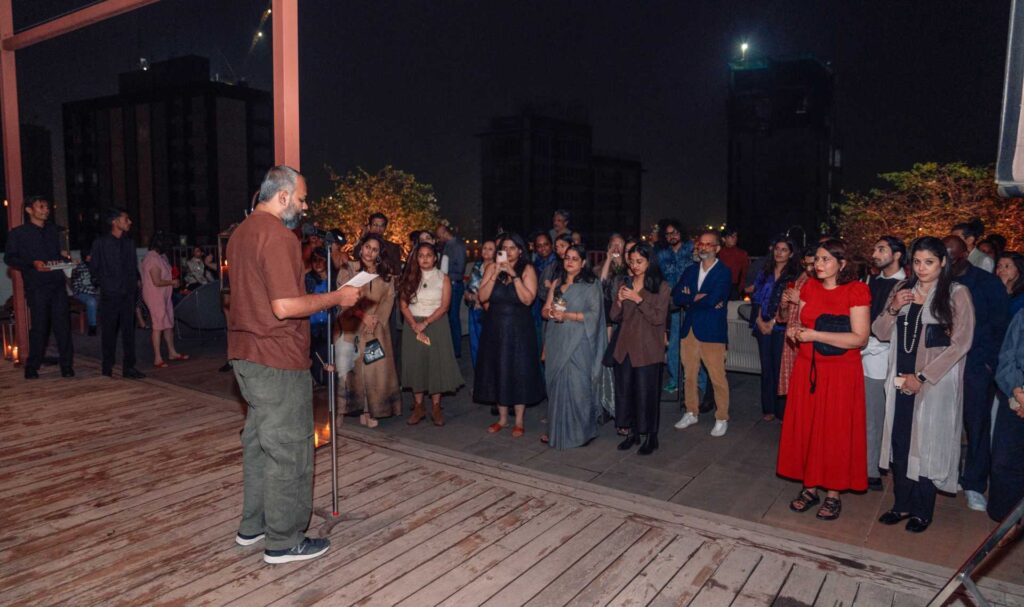
Dear brothers and sisters and friends, and I see some enemies.
This line is not mine. It was spoken in Detroit, 1964, by Malcolm X.
He was not greeting an audience. He was diagnosing one. Malcolm was speaking to people who believed they were on the right side of history. People who thought participation itself was progress. People who confused being invited with having power. Malcolm called that bluff, because if your presence changes nothing, you were never a threat. You were decoration.
He said: Democracy that does not deliver justice is not democracy. It is delay.
He said: Participation without consequence is containment.
Today, the language has changed. The structure has not. We no longer say “ballot.” We say platform. Dialogue. Inclusion. Representation. We are invited to speak, to be visible, to be framed, to be celebrated. But the conditions remain untouched.
Let me be precise. If invocation does not change who owns, who decides, who benefits, then invocation is decoration. If participation does not alter material conditions, then participation is performance. Malcolm did not ask to be included. He set a condition: if this system works, we stay. If it doesn’t, its legitimacy collapses. That is not extremism. That is logic.
This gathering will be tested by the same rule today. Not by intent. Not by tone. By outcome. This is not a blessing. This is not an opening. This is a condition.
Today is the ninth of January. It is the birth anniversary of Fatima Sheikh, India’s first Muslim woman teacher, who alongside Savitribai and Jotirao Phule, opened the first school for girls from her own home. Her name was not included. Deliberately. Because the patriarchal system cannot afford to remember that Dalit and Muslim women led the fight for education. That sanitised history is how upper-caste and also patriarchy in anti-caste dominance still survives. She understood education not as inclusion, but as condition.
Tonight, anti-caste art is the theme. That sentence should make us uncomfortable. Caste is not a theme. It is not a curatorial frame. It should not be a seasonal focus. Caste is a structure that has survived empires, religions, modernism, nationalism, and now, very comfortably, contemporary art. So what does it mean when anti-caste art is invited into a collector-led social, just before dinner? Who is this for? Transformation or reassurance?
I am standing here as a Dalit artist in your context. Not as an abstract identity. Not as representation. But as someone whose body, labour, language and access have been shaped by caste long before I entered the art world. Tonight, I have been invited to perform anti-caste art for you. That itself is a contradiction. Anti-caste thought does not seek inclusion. It seeks annihilation of caste itself. And it does not need saviours, not from collectors, not from institutions, not from artists who think making work about us is the same as standing with us. It needs accomplices willing to lose something.
Let me be clear about the structure we all stand in. This room contains people who decide what enters history. Galleries that decide who is seen, repeatedly, not symbolically. Institutions that decide whose politics are “too much” and whose silence is called “formal rigour.” This room contains money. And money is never neutral.
Let me say something rarely said out loud in Indian art spaces: caste does not disappear when art becomes political. It reorganises itself. It hides behind language like merit, quality, practice, international relevance. Anti-caste art is often welcomed, as long as it does not ask who owns, who profits, who collects, who controls.
So I want to ask you materially: How many Dalit artists are in your collections, not as exceptions, not as themes, but as sustained commitments? How many galleries here have shown anti-caste work outside this week, outside this spotlight? How many of us are willing to lose comfort, access, or capital, not just gain moral credibility?
Indian art criticism has become sophisticated at deconstructing the Western gaze. We can write essays on orientalism, on how the West consumes our images, our suffering, our difference. But Susan Sontag asked: what does it mean to regard the pain of others? And I ask: who are the “others” whose pain Indian art institutions are willing to regard, but never address? We will critique how Europe looks at us. But how do Savarna collectors, critics, and institutions look at marginalised labour, artists and their pain? That gaze remains unexamined. That consumption remains comfortable.
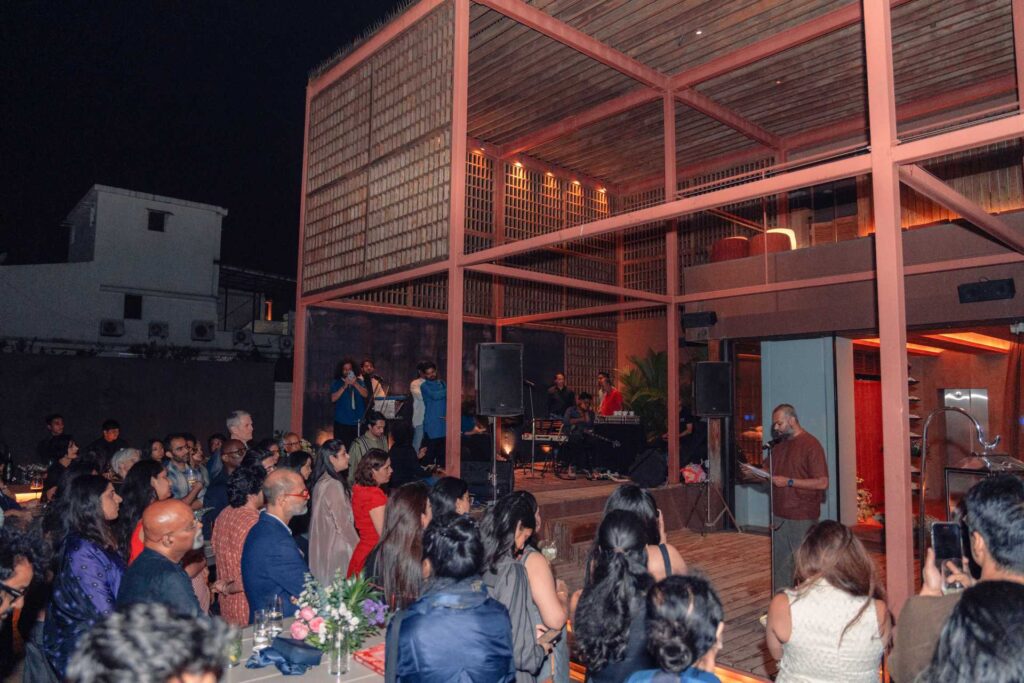
In few minutes, we will eat dinner together. Before that happens, sit with this: Who cooked the food we will eat tonight? Who will clear the plates? Who will never be invited into this room, even though their labour makes this very evening possible? Caste does not end at the gallery wall. It enters through the kitchen, the security gate, the freight elevator, the cleaning staff entrance. If anti-caste art cannot speak to this, then it is only aesthetic rebellion.
To those who come from my community, Dalit, Bahujan, Adivasi artists entering these spaces now: This is a message for you. Your visibility is not your freedom. Every invitation comes with conditions. Every platform has its politics. The question is not about if you were included. The question is: WHOSE system did YOU strengthen by being there? These questions will not be asked today. But they will be asked later.
In 1971, German artist Hans Haacke showed that art patrons’ money comes from somewhere, often from exploitation. The Guggenheim museum cancelled his show for saying this out loud. So where does the money in this room come from? Not abstractly. Specifically. Which factories? Which real estate? Which labour laws ignored? Which environmental regulations bypassed? Which sites of extraction employed Dalit workers, displaced Adivasi communities, poisoned Bahujan neighborhoods? Cultural philanthropy is comfortable when we don’t ask these questions.
I invoke all those whose names never entered catalogues, archives, or collections, but whose hands built the materials of Indian art. I invoke Ambedkar, not as a statue, not as a slogan, but as an unresolved question standing among us. Today is 9th January and on this same day in 1930, at the Round Table Conference, he said: “Leadership cannot be imposed, it must be accepted by those on whose behalf it is claimed.” He was challenging Gandhi’s right to speak for the Depressed Classes. Today, I ask the same of this room: who gave you permission to curate our struggle? He asked for annihilation, not representation. That demand still stands.
Let me say this clearly: If anti-caste art is only allowed to exist as a theme, if it is invited for the evening and forgotten by morning then this is not solidarity. It is management. I refuse to offer you comfort in the name of justice. What comes next is not a performance. It is a refusal to be polite. I pass this space now to Yalgaar Sanskrutik Manch. If you feel unsettled tonight, that’s good. That means something is still alive.
Yogesh Barve is a Mumbai-based artist who uses various media to challenge norms and binaries, creating immersive environments that blend personal and public realms.