
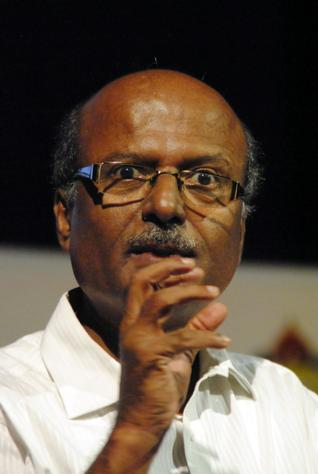
I conducted the interview with Prof. Valerian Rodrigues in person in Mangalore in April 2024 and recorded the conversation on audio. The interview explores Rodrigues’ political and intellectual journey, as well as the social history of Konkani-speaking Catholics in coastal Karnataka, historically known as South Kanara, spanning present-day Udupi and Dakshina Kannada districts in Karnataka and parts of northern Kasargod district in Kerala. It focuses particularly on questions of caste, class, land reform, and the socio-economic transformation of the Catholic community of the region. It also touches on his engagement with Marxism, Ambedkar, and democratic politics.
The interview has been edited for grammar, clarity, and continuity.
Rubin Mathias: Could you begin by talking about your background, your early teaching, your involvement in land reforms and the left movement, and how you moved into academic work at Mangalore University, Oxford, and Jawarharlal Nehru University (JNU)?
Valerian Rodrigues: I taught at the SDM College in Ujire, then went on to Jawaharlal Nehru University, where I wrote my thesis. Over time, I moved into what I would call egalitarian thought. I had a short but important experience with grassroots movements in the late 1970s. Later, I worked at Mangalore University in Konaje for some years, spent considerable time in Oxford, and eventually taught at JNU for about 15 years.
I was involved in land reform issues in Karnataka, and that was how I established contact with Eric Ozario. At that time, I was also associated with an ML (Marxist-Leninist) group. I left later because I developed a critique of the overall ML strategy. I did not think it was the best way to build a genuinely radical democratic project. After that, I moved more fully into academics. I remained sympathetic to movements here and there, but I was no longer directly involved in the same way.
I also spent time with radical movements in Bihar in the 1970s, particularly in Bhojpur. I did a major project while staying with ML groups, including the Vinod Mishra group. I also worked in Dhanbad and spent time with A. K. Roy, who struck me as somewhat morose. I stayed with Shibu Soren as well, and travelled extensively with him in his jeep across the region, before Jharkhand was formed.
At that time, I used to sport long hair, and I still remember the Santali women sometimes treating me as if I were Shibu because we looked somewhat similar. Around 1982, once I got more deeply involved in academics from Mangalore University onward, I was no longer directly involved in grassroots work.
I remained deeply interested in the trade union movement, though my involvement became touch-and-go, except during the period when I was with ML groups and tried to do direct organising in places like Peenya in Bangalore.
Later, many of my students became involved with the Communist Party of India (ML) Liberation. But Liberation had changed a great deal from the phase I had known, especially once it began moving toward the electoral path. Some of my students were also involved with the Maoists. By then, I had become somewhat distanced from both. They remained close to me in many ways. It is not that I discouraged them. But I was never fully sure that the way they were spending their lives was the best way forward, especially because the Maoists often asked people almost directly to give up their studies and dedicate themselves completely. In that sense, Liberation allowed more space.
I travelled across Bhojpur with friends like Kalyan Mukherji and others who were doing fieldwork and later wrote a book. I also knew Shankar Guha Niyogi. He once stayed with me in JNU. I would not say I was very close to him, but I knew many people who worked with him.
Caste and class among South Kanara Christians
Mathias: I’d like to turn to caste and class among Christians in South Kanara. Based on your work and that of scholars like Vinay Rajat, how would you describe the historical social stratification of the community and the transformations it has undergone since the 1970s?
Rodrigues: Vinay Rajat, who worked specifically on social stratification and caste among South Canara Catholics, was a student at Mangalore University when I was a professor there. The Honnavar or North Kanara side has a somewhat different social makeup. But if we look at Christians along the western coastal belt from Kasargod up to around Udupi, we can broadly divide them into two large categories. About 95 percent are Catholics, though we do not have exact figures, and perhaps 5 percent belong to non-Catholic groups, most of them historically connected to the Basel Mission.
There is a thesis that argues that most of these Catholics came from Goa and beyond. I think that is only half true. A significant section certainly did move southward for a variety of reasons, including persecution. But that is not the whole story. There was also a great deal of local conversion. The people we now call Gowdis, those who lived in the riverine belt up to Shiroor, might constitute a significant section of local converts. Then there were the 19th-century converts, especially through Jesuit and Capuchin missionary activity in places like Naravi, Venoor, and Belthangady. Some of them were later brought into Mangalore and settled in church compounds.
So among Catholics, one can distinguish at least three broad streams: those who migrated from the Goa side, erstwhile local converts, and 19th-century converts. That distinction is important. Many of those converted in the later 19th century by priests like Fr. (Faustine) Corti continued to speak Tulu within the home until quite recently. The imposition of Konkani over them, largely through the institutional agency of the church, is a comparatively recent development, roughly of the last generation. When I was a child, and even later when I taught in the SDM College, many such families still spoke Tulu at home. Today, there is almost a lapse of memory about that.
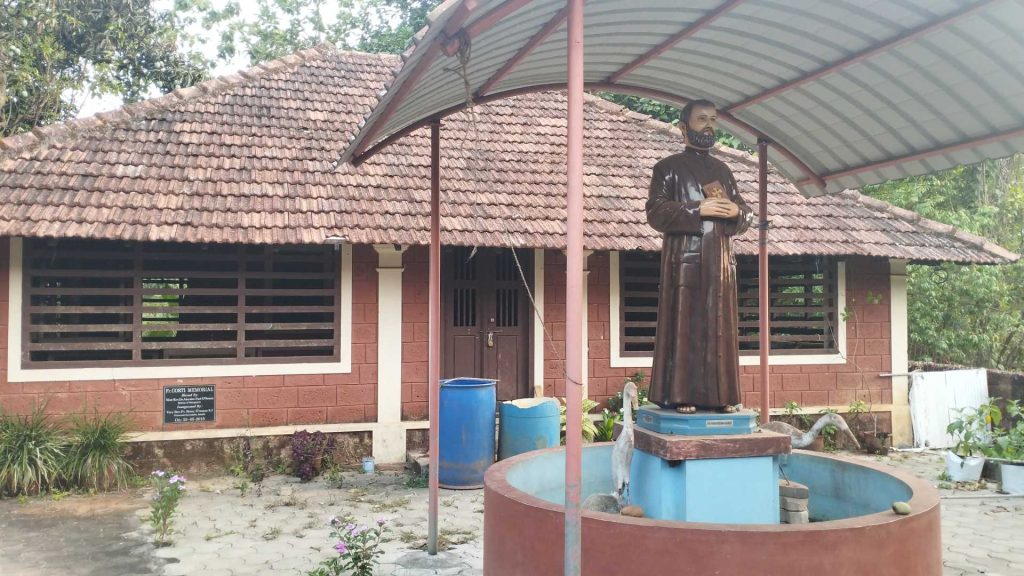
The term Gowdi Kristanv should not be understood too simplistically. Gowda is not necessarily the same as Vokkaliga. It referred more broadly to someone involved in cultivation and agrarian activity. Many of the 19th-century converts were either tribal communities or belonged to lower castes. There were also other agrarian backward caste segments, particularly Billavas, who remained closely tied to the church as a source of schooling and other institutional support.
The condition of Christians overall in the 1960s was often quite poor. The famine of 1965 hit agrarian populations severely, especially poor Christians and Billavas. When one turns to Catholics who today claim migrant origins from Goa, one sees one segment among them that went into mercantile activity and had earlier associations with the Portuguese. Some were even connected, in different ways, to Tipu Sultan’s period. When the British took over in 1799, this segment moved closer to the British. That created its own tensions, given their prior association with the Portuguese. This group may have comprised around 20 percent of Catholics. The rest vast majority were largely in agriculture, mainly tenants, with a substantial number of landless labourers.
Those stories have not really been collected adequately. Many Catholics also went as workers to the coffee estates in Chikmagalur. Some of them later absorbed the mannerisms of the planter world as they moved into the lower rungs of the petty bourgeoisie. Early trade union activity in the coffee estates was often led by Christians. There was an important trade union leader named D’Silva among the coffee workers, though I have seen very little written about him. What I know is mostly oral, through my wife’s relatives, some of whom came from small coffee planter backgrounds.
This section that became relatively close to the colonial order in the region was also very close to the church. But because it was a Catholic church, it was not directly just a component of the colonial state. There was a tension there. Yet the church often learned its social mannerisms from this relatively colonial-friendly section. If you look at priests in the 19th century, many of them seemed to model themselves after this landholding section.
In rural areas, priests often acted much like landlords. I still remember as a small boy that disputes were not always taken to court; they were taken either to major Bunt landlords or to the priests. The priests could behave in ways very similar to the Bunt landlords in village society.
Another important point is that the Catholics who migrated did not settle individually so much as in clusters. My own family settled in a place near Bantwal. They were tenants and essentially Kumeri cultivators. Kumeri cultivation is slightly upland cultivation, dependent largely on rainwater and usually yielding one crop, things like sweet potato. The Christians in these areas became known as very good vegetable growers.
That agrarian world changed radically in the 1970s, and I think three major factors drove the transformation. The first was land reform. One of my essays was on land reforms in Karnataka. Others have done better work later, but I did a fair amount of empirical, data-based work. Large numbers of tenancy applications were processed under the reforms, and a significant section of the beneficiaries were Catholic tenants. They no longer had to pay rent, and rents in this region had been extremely heavy. We talk today in terms of borewells and irrigation systems, but in those days much agriculture depended on stream water; crop failures were common; and rent could absorb as much as two-thirds of the crop.
Educational levels among agricultural Christians had been low. A few got educated when a family was large or had someone working outside, but overall higher education among agrarian Christian families was very limited until the 1970s. Once they acquired land, some surplus began to accumulate. Children were sent to school more regularly. It is not accidental that many of the colleges in the region expanded or became socially important in the late 1970s, when demand for higher education rose.
The second factor was Gulf migration after 1973 and the oil boom following the Yom Kippur War. Before that, only a few people went to the Gulf. Then suddenly a large number of Christians started going to the Gulf countries, and money began to come back. The amounts were small at first, but this created an outlet for surplus population. Earlier, surplus labour had mainly gone either to coffee estates or to Bombay. Most of those who went to Bombay did subordinate work and lived in chawls. I have stayed with relatives in such one-room tenements. Even those considered to be doing well in Bombay often occupied rather modest positions. That stream of surplus labour then shifted toward the Gulf.
The third factor was the expansion of higher education. Colleges began to mushroom in the region. There was a small agricultural surplus, some income from migration, and children started going to colleges in larger numbers. A land market also developed. Today many Christians who think of themselves as urban still have roots in remote or outlying rural areas. Many of their families had earlier been pushed off land because they could not pay rent.
Then the church played a very interesting role. This was a Latin Catholic church. After the Second Vatican Council and its emphasis on vernacularisation, the church suddenly adopted Konkani as the primary liturgical language from Latin, imprinting its own stamp on it. Until then, many priests had spoken Tulu. I still remember that in places like Sasthan, beyond Udupi near Brahmavar, there was not much difference in everyday social life between Catholics and local Mogaveeras.
The shift to Konkani as a central identity marker also cut Catholics off, I feel, from much larger social moorings. Once the church closed itself in certain ways, others too closed themselves off from it. The church was anxious because more girls were being educated, appearing more socially mobile, and there was a spurt of Catholic girls marrying outside the community in the 1970s and early 1980s. One hears today these alarmist narratives like “love jihad”; in some ways, the underlying anxiety had earlier forms in this region too which can be linked with assertion of women.
At the same time Catholics became more socially distant from Billavas. As a child I used to eat freely in neighbouring Billava homes as if they were my own. Today the barriers are much stronger. Many Catholics once had multiple spaces of religious existence. They might keep a small bhuta shrine in the house. Priests, when visiting homes, would look for such things. There was gossip: do not give your daughter there because that household still does bhuta worship. If one looks at sermons from the 1960s and 1970s, many were directed against such practices among the Catholics. At first these efforts to sever such links did not fully succeed, but by the late 1970s they had become much more effective.
As for caste, Catholics married largely within their own caste locations. The Sarodi or Charodi groups from Santhekatte in Kallianpur up to Shiroor married among themselves. Old Christians, themselves divided into caste groupings, did not easily marry New Christians from Naravi or Venoor. The internal caste structure among Catholics was quite distinct. These distinctions have mellowed down substantially over time, but they have certainly not disappeared altogether. The marriage market has widened, but it widened historically only after long periods of restriction.
Padroado, Propaganda, and caste within Catholicism
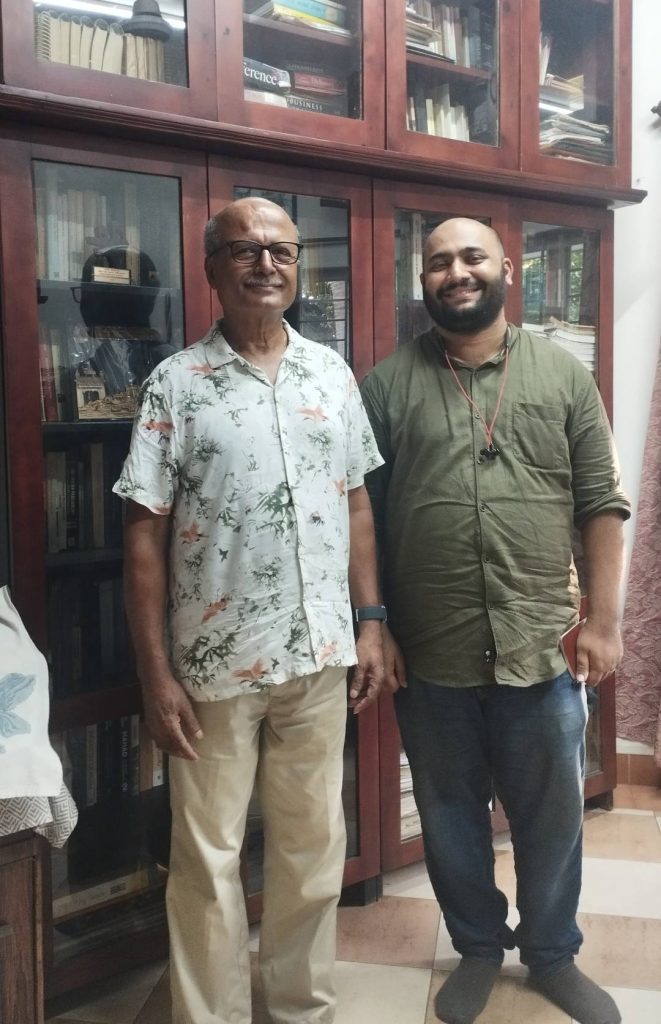
Mathias: Could you explain how the Padroado and Propaganda shaped these distinctions?
Rodrigues: The Portuguese monarch received papal authority to propagate Christianity in the colonies through what in canonical church language was called a Papal Bull. That power was then delegated to the Bishop of Goa. This was Padroado Christianity. Today we know a great deal about Padroado. Large-scale conversions in this region and in Tamil Nadu’s Madurai mission were carried out by the Jesuits. Christianity was imposed on top of existing caste stratification.
It is also important to remember that caste on the coast functioned differently from caste in the Deccan plateau or the Gangetic plains. Caste across India was deeply uneven. There were attempts in some historical periods, such as under the Hoysalas, to harden caste distinctions by elevating Brahmins to the top. But in many places, caste remained more fluid. It is with British colonialism, especially by the mid-19th century, that caste divisions became much more standardised and entrenched. Nicholas Dirks’s work is useful on this point. That does not mean there was no caste before colonialism; it means it was not uniform, homogeneous, or equally rigid everywhere.
Hilly tracts, for example, could not function with the same caste logic found in the Gangetic plains. Yet the legitimising structure still remained caste normativity. Padroado Christianity sat within that structure.
Propaganda Christianity was different. The Propaganda missions were directly controlled by a wing of the Roman Curia called the Propaganda Fide. After the Portuguese spread Christianity in their own spheres, Propaganda Fide also became active. The Capuchins, for instance, worked across northern India and went up to Tibet. Some missions came under Propaganda, others under Padroado. One place where they clashed prominently was Bombay, but we had similar divisions here as well.
A stable diocesan structure came only later, around the middle of the 19th century. Before that the story of Mangalore Catholicism is quite murky because Padroado and Propaganda authority overlapped and competed. Padroado, after all, covered not only South India but also extended across Southeast Asia up to China. The Archbishop of Goa styled himself the patron of the entire East.
Christian migration also followed these ecclesiastical routes. Some Mangalore Catholics, because of their attachment to church structures, migrated to Kerala, Tamil Nadu, Burma, and even to places linked to China such as Macau. The clash between Propaganda and Padroado continued for a long time and was patched up only much later, where different caste groupings would align with either sections of the schism.
Thus, one parish like Kinnigoli might come under Padroado while another nearby one like Kirem came under Propaganda. Often, people from the two would not intermarry. There were no deep theological objections in many of these cases, but priests would often demand written assurance about which ritual regime a married couple would follow. In some places, fights caused a whole group to leave, as in Brahmavar, where a section left and joined a Syrian Orthodox stream. Marriage was central to the reproduction of community, so these divisions mattered enormously. If you trace marriages historically, most happened within these sectarian-caste circles. As (D. D.) Kosambi would say, marriage circles were very small. Today, the circle may run from Byndoor down the coast, but that is a later expansion.
Mathias: What was the relationship between caste and class within the Catholic community? Also, to what extent has the church dealt with social life with Christian social life in the region?
Rodrigues: That 20 percent segment I mentioned, the one associated with colonial occupations, entered fields like trade, tile manufacturing, and commercial work. Handloom production in Mangalore was also a major occupation for Christians.
There were few Bamon Catholics who were poor, tenants, or even landless labourers. At the extremes the pattern was much clearer. If someone was wealthy, owned a tile factory, or had large numbers working under him in handloom or trade, he was very likely to be a Bamon. If someone was in fishing or associated with more manual and precarious work, he was much more likely to belong to a lower caste group such as Gowdi or Sudir, while Charodis were much more upwardly mobile, with a large section of them being involved in middle tenantry under Bunt or sometimes Christian landlords. So at the extremes, caste and class aligned more clearly; in the middle, it did not.
Another dimension also emerged later of the church as a powerful institution of social control. Through what is sometimes called the Gurkar system, and through small prayer units and parish-based religious organisations, the church began to reach into household life in very intimate ways. This resembled, in a distant sense, the basic Christian communities of Latin America, but unlike the emancipatory potential those communities sometimes carried, here the emphasis was more on surveillance and ritual control. The faithful gathered, prayed, received priestly guidance, and the parish structure entered domestic life ever more deeply.
Because of this, even extremely poor and backwards-caste Christians today often pursue mobility through church schools, welfare networks, and migration rather than through any radical or rebellious route. I do not see much space for rebellion within the community now. There may have been a little more of that possibility in the 1970s and 1980s, when people like Eric Ozario or even figures like George Fernandes earlier emerged in more rebellious ways. But today the Catholic Sabha in Mangalore, for example, has been brought under tighter clerical control.
Christian mobility was aided by another factor: a certain facility with English. Church schooling gave many Christians better competence in spoken English, and for a long time many skills and occupations with upward mobility were linked to English. That helped. But Christians, by and large, did not enter entrepreneurship in the same way some other communities did. Billavas and Bunts moved more strongly into enterprise. Business requires social capital, negotiating networks, durable social bonds, and linguistic flexibility of a certain kind. Where Christians did move into enterprise, they often did not possess the same thickness of social capital.
Marxism and the scholarship on Ambedkar
Mathias: Could you talk about your intellectual journey with respect to Marxism and your scholarship on B. R. Ambedkar?
Rodrigues: My journey to Ambedkar did not come from pre-existing ideological affiliation. I had close Dalit friends, but they were not my ideological friends at the time. My path came through academics.
My PhD thesis was on Marxism, specifically on the idea of the party in Marxism. I did a great deal of close work on the Soviet Union and China, especially the later stages of the Chinese Revolution before the shift to the market, the Cultural Revolution and the so-called Gang of Four. While I was working on these questions, I began to realise that the kind of Marxism that had shaped my life, and the lives of many others I knew, had several major deficit areas.
It is not that these deficit areas were never discussed. They were discussed in small Marxist enclaves. But they were not integrated adequately into political practice. One deficit was around the idea of ‘the moral’, the moral bonds that govern people’s lives, make them relate to one another, and sustain relationships. Another deficit concerned freedom, not freedom in the market sense, but freedom as a creative human impulse. Marxism did not, for a very long time, properly develop an understanding of difference, not only social difference, but what one might call epistemic difference.
By that I mean this: one person may define a meaningful life in one way because certain fundamentals guide their destiny; another person may define themselves quite differently. In that process, society generates difference, and that difference is creative. Marx himself hints at this. But the idea that everyone can have a level playing field while becoming very different, and that society must open itself to such difference, was not sufficiently developed.
The third deficit, and perhaps the most decisive one for me, concerned democracy. Democracy is not merely an instrument. It is a bond through which I help another person realise themselves as much as I seek their help to realise myself. It is sociality as the basis of collective life. It is not only elections and institutions; it is a way of life.
I travelled quite a bit in Europe, especially among working-class circles, and I saw something of what such sociality could mean. By contrast, the Soviet and Chinese systems I studied were deeply centralised. Even in the ML circles I had known, especially in underground situations, the pressures toward centralisation were immense because one is always trying to protect oneself from the enemy. In that condition, one easily begins to ignore people at the lowest level. That is the paradox: one speaks of democracy, but crisis constantly pushes one toward control.
I remember younger people who joined ML organisations and later became leaders. Over time, they reproduced the same methods. They would defend themselves by saying that within the system they worked in, there was little room to cultivate a genuinely communitarian bond while also functioning as revolutionaries. That experience pushed me toward an academic critique in the 1980s.
I began to read democratic theory and egalitarian liberal thought much more seriously. I worked on these questions intensely, especially during the years I spent in Oxford. But I was not driven by Oxford as such; I was driven by my own problem. Then I asked: why should I remain only with Western thinkers? How did people in India who called themselves liberals or democrats justify themselves?
I first looked at what are often called Indian liberals. They struck me as elitist. I studied Nehru closely, but he appeared to me rather shallow on some of these foundational issues. Then I turned to Ambedkar in the late 1980s, when Ambedkar did not occupy anything like the public place he does today. I went to Ambedkar because I wanted to understand why this man defended a particular democratic or constitutional project, whatever we choose to call it.
My first major essay on Ambedkar, written in the 1990s, was on how Ambedkar reads Buddhism, titled ‘Making a Tradition Critical: Ambedkar’s Reading of Buddhism’. Then I edited The Essential Writings of B. R. Ambedkar, which came out in 2002. I completed that work rather quickly, but for whatever reason, it found a wide readership.
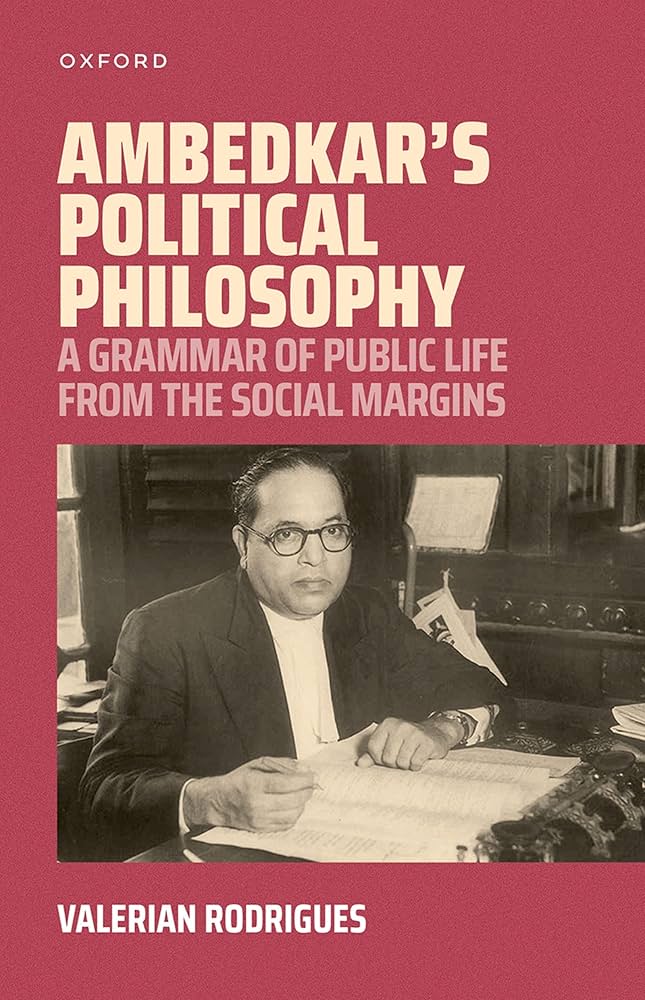
Later, I moved away from studying Ambedkar for a while and worked more broadly on modern Indian thought. But around 2020, Ambedkar re-emerged very powerfully in public discourse, and people began reading him in very different ways. I returned to Ambedkar again. I did not publish much in the interim except for some edited work. More recently, I completed a large book, Ambedkar’s Political Philosophy: A Grammar of Public Life from the Social Margins.
My own map of the world has changed now, not only because of Ambedkar, but Ambedkar is certainly part of the reason. I have returned to working on Nehru and also on Ram Manohar Lohia, for somewhat different reasons. I want to understand how the postcolonial world appropriated and reimagined democracy. Ambedkar, Nehru, and Lohia are among the key figures who tried to formulate a distinct democratic imagination, neither Soviet democracy, nor orthodox Marxist democracy, nor simply liberal democracy in the Western sense.
Of course there are tensions and withdrawals there. Lohia attacks Nehru sharply, and often rightly. Nehru had a fascination with Europe that Lohia did not. Ambedkar’s route is different again. But none of them are simply exclusivists. Today I feel that any radical project in India that distances itself from democracy, from freedom, from sociality, and from a wider sense of the world may take root in certain pockets, but it will not have much life.
Mathias: How do you understand the communist movement’s engagement with caste over the years?
Rodrigues: Communist parties for a very long time proceeded with the line that class is primary and caste secondary. They shifted language from time to time. Sometimes caste was described as class-like, sometimes class was made to absorb caste, and so on. But such formulations do not really work on the ground.
The class composition of communist parties, including ML streams, mattered a great deal. Upper-caste people and, to an extent, dominant intermediary castes often came to play a decisive role. I would not dismiss them crudely as ‘Brahmin communists’, because many had great commitment and sacrifice. But that does not mean they were able to grapple with caste adequately.
In underground guerrilla contexts, one sees another distortion. People live in enclaves. Their relations with wider society become mediated by strategy and secrecy. That shelter can itself conceal unresolved caste realities. One may see people marry across certain boundaries inside the movement, but those possibilities do not easily scale into broader society.
I increasingly think the meaningful route to social transformation is through democratic deepening and mass movement. The idea of the mass movement, which became so creative in India, is central here.
Communists sometimes distinguish between mass movements that align with revolutionary strategy and mass movements that do not know where they are going. I now think that distinction is itself deeply problematic. A movement, if it remains open rather than closed, releases enormous creativity.
As a child, I was terribly afraid of landlords and big authority. Participation in movements removed that fear. One need not romanticise violence, and one certainly need not think courage emerges only through bloodshed. But movements transform ordinary people. They destroy internalised hierarchy. In India, where ascriptive hierarchies shape everyday behaviour, movements can be profoundly creative social levelers.
I saw something like that in Jharkhand while travelling with Shibu Soren. I remember a huge gathering of Adivasis, perhaps around two lakh people, armed with bows and arrows in Dumka. The confidence that the movement generated among them was extraordinary. Soren once remarked that if he asked them to destroy an entire town, no police force could stop them. What struck me was not the threat itself but the confidence that collective action had produced among people who had long been subordinated.
That confidence is one of the deepest products of movement. Electoral democracy, however, often absorbs and flattens such energy. I am not against electoral democracy in principle, but I am quite critical of the emphasis put on it. It has swallowed up the idea of democracy itself.
Parliament, communist strategy, and democratic horizons
Mathias: How do you evaluate the parliamentary left and the strategy of combining elections with radical transformation?
Rodrigues: The old communist claim was that they would enter parliament in order to wreck parliament from within. What happened, in effect, is the reverse: they were wrecked by parliament.
Electoral politics has its own internal logic. Once parties enter that field, they begin to be reorganised by it, by competition, by the need for offices, by the management of alliances, by the compulsions of legitimacy. They may believe they are using parliament instrumentally, but parliament is also using them. This is true of the CPI and CPI(M), and any party that thinks it can treat electoral participation as a purely external tactic should be careful. The structure of electoral politics is deeply transformative of the organisation itself.
Mathias: How do you view the communist movement in Kerala, especially in relation to caste and Dalit life, and how does it compare with Karnataka?
Rodrigues: Kerala is a very complex case. There is no doubt that the communist movement made important interventions, education, certain kinds of social reform, and land reform among them. It opened spaces.
A great deal of communist energy in Kerala was built through lower and intermediate caste mobilisations, especially among groups like the Ezhavas. But one must distinguish between the experience of such communities and that of landless Dalits. The trajectories are not the same.
Some recent Dalit writing from Kerala is very striking on this. The argument, as I understand it, is not simply that communists did nothing. Rather, communist modernity rationalised social life in ways that dismantled diffuse customary powers, ritual roles, and social spaces through which Dalit communities had at least some dispersed presence. Yet what replaced these was not always land, self-assertion, or durable power. One can therefore end up with a modernised society in which older oppressive structures have been challenged, but without a corresponding growth in Dalit autonomy.
In Karnataka, by contrast, Dalits may be materially worse off in many contexts, but one often sees stronger traditions of political assertion.
Mathias: What is your view of China, Vietnam, and Cuba today?
Rodrigues: Vietnam is now a deeply market-oriented society ruled by a communist party, and the US dollar carries enormous prestige there. Of course, the decades of revolutionary struggle left a deep residual mark. People possess a strong sense of self-respect and a belief that they can shape their own future. That residue, I think, is one of the legacies of the communist period.
I have not visited China myself, though my elder daughter travelled widely there. My impression is that the Chinese are an extraordinarily confident people. That confidence would not have been possible without the transformations in land relations carried out during and after the revolution, especially between 1949 and 1956.
Because of that energy, one often sees a great deal of participation at different levels. That participation is not necessarily democratic in the normative sense. But confident people assert themselves. So sometimes grassroots participation in China may appear stronger than what one sees in Indian panchayats, even though China is not democratic in the way we ordinarily mean by the term.
As for Cuba, I had once thought communism might survive there longer. But I think it too is receding, largely because of growing privatization. Some version of socialism may continue in altered form, but the old model appears to be weakening.
Mathias: What about the attraction of American capitalism? How do you understand its ideological force?
Rodrigues: American capitalism is distinctive in one important respect: it sustains a powerful imaginary of entrepreneurship and self-making. People from modest or disadvantaged backgrounds can still imagine upward mobility through individual effort. That dream is not equally available to everyone, of course, and for many it remains more ideological promise than material reality. But the dream persists because American capitalism has retained a certain creative and absorptive capacity.
That is why one cannot critique it simply by saying it is exploitative. It is exploitative, certainly. But one must also explain why it continues to generate aspiration. In many other capitalist settings, the promise of mobility has become thinner. In the United States, it still retains cultural power.
Mathias: Given all this, what do you think radical politics in India should be learning today?
Rodrigues: There is no single available model. The key question is: what kind of social process enlarges human capacities?
Any serious politics must work with freedom, democracy, and sociality as foundational principles. It must ask how people become more confident, more equal, less afraid, more capable of initiative, and more able to enter public life with dignity. If a political formation cannot do that, it may achieve temporary victories, but it will not generate a durable future.
Mathias: Could you please tell us what are you working on at the moment?
Rodrigues: I have become increasingly interested in working on Lingayat society, the Basava or Vachana tradition, and the radical ethical and social imagination that has not yet been adequately explored in relation to present politics. I would like to do fieldwork around that world and think more carefully about what kinds of democratic resources it still contains.
Rubin Mathias is an independent writer and musician based in Bengaluru.